
Table of Contents
What Is a 1 4 Inch Spacer?
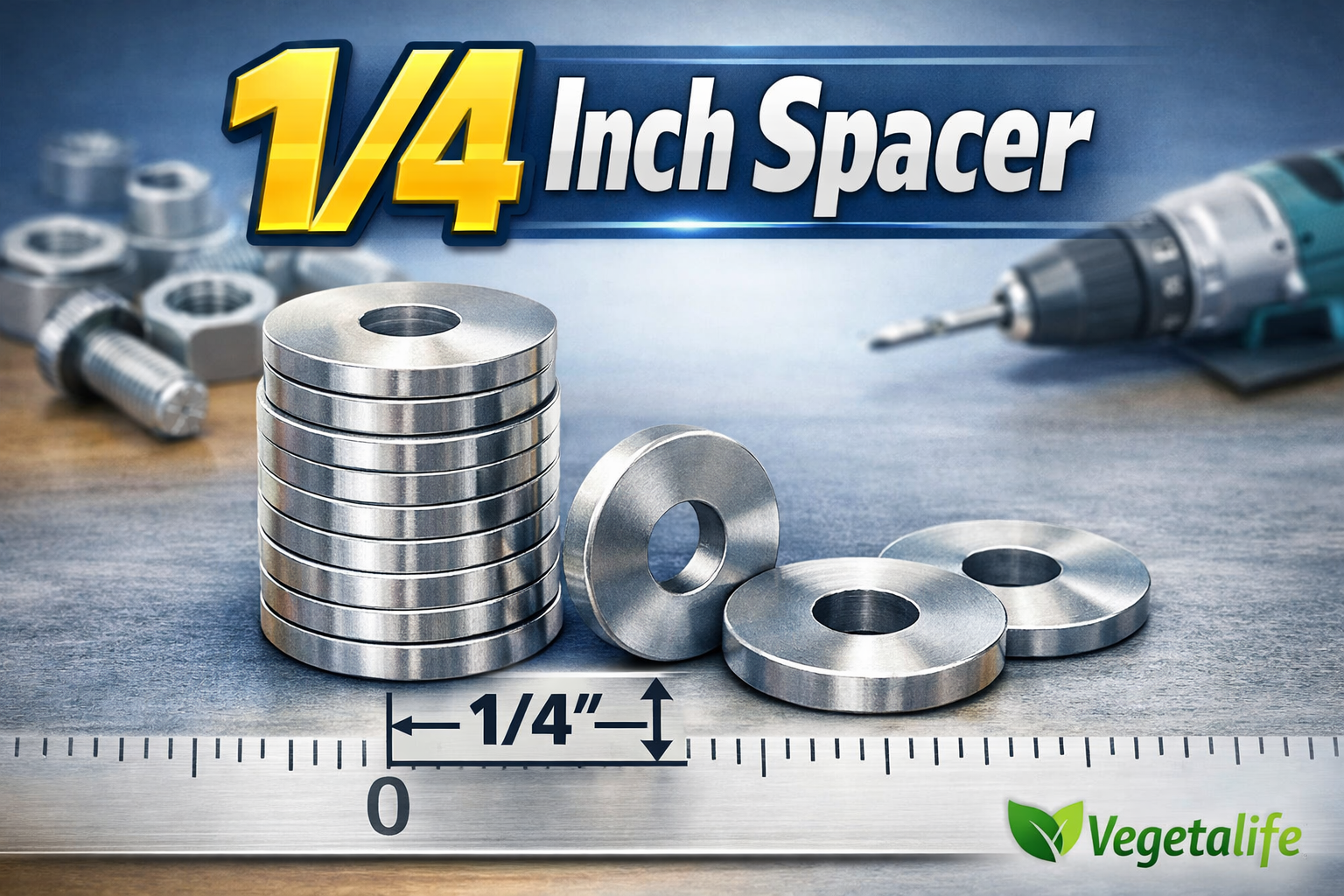
A 1 4 inch spacer, sometimes called a quarter-inch spacer, is a small but incredibly useful hardware component that creates a precise gap or space between two parts. It may look simple—a small cylinder or tube with a hole in the middle—but its function is crucial in many applications. Essentially, it ensures that parts do not rub against each other, aligns components properly, and can help prevent damage caused by friction, pressure, or misalignment. These spacers can be made from various materials, including metal, plastic, or nylon, and their size and material choice depend on the application. For instance, in electronics, a 1/4 inch spacer may separate circuit boards to prevent short circuits, while in automotive settings, it can adjust wheel alignment or create clearance between components. The beauty of a 1 4 inch spacer lies in its simplicity—it is small, inexpensive, and easy to install, yet it solves common mechanical and assembly problems efficiently. Whether you are a DIY enthusiast, a professional mechanic, or someone working on furniture assembly, understanding how to use this spacer can make your projects safer, more precise, and longer-lasting.
How Does a 1/4 Inch Spacer Work?
A 1/4 inch spacer works by creating a small, precise gap between two components, allowing them to fit together properly without rubbing or interference. This simple piece of hardware might seem insignificant, but it plays a crucial role in both mechanical and electrical applications. By adding a quarter-inch thickness between parts, it ensures that objects are aligned correctly, reduces friction, and prevents potential damage that could occur when components are forced together too tightly. For example, in automotive applications, a 1/4 inch spacer can be used between wheels and hubs to adjust the alignment slightly, improving handling and preventing uneven tire wear. In electronics, it separates circuit boards or panels so that components do not touch each other, which could otherwise cause short circuits or overheating. The way a spacer works is straightforward—it transfers and distributes pressure evenly across surfaces, maintains a uniform distance, and allows for smooth operation of moving parts. It essentially acts as a buffer or bridge between two pieces, ensuring stability and longevity in assemblies.
The effectiveness of a 1/4 inch spacer also depends on its material and design. Metal spacers, such as those made from aluminum or stainless steel, are strong and durable, suitable for heavy loads or high-stress applications where strength is critical. Plastic or nylon spacers, on the other hand, are lightweight, corrosion-resistant, and ideal for electronics, furniture, or light-duty projects where electrical insulation is necessary. Some spacers are threaded to allow bolts or screws to pass through, providing extra stability, while others are smooth for simple separation purposes. The inner diameter, outer diameter, and overall thickness must match the components they are spacing, which makes accurate measurement essential. By understanding how a 1/4 inch spacer works, users can apply it in multiple scenarios—from DIY furniture to high-precision machinery—ensuring better alignment, reduced wear and tear, and improved safety across projects. In short, this small but powerful tool makes assemblies easier, more reliable, and more precise.
Main Uses of a 1 4 Inch Spacer
A 1 4 inch spacer is an incredibly versatile tool that finds use in a wide range of industries and applications, from automotive and electronics to home DIY projects. In the automotive world, these spacers are commonly used to adjust wheel fitment and alignment, providing the necessary clearance between wheels and vehicle hubs. Even a small adjustment of a quarter inch can prevent tires from rubbing against suspension components or body panels, improving both performance and safety. Beyond wheels, 1/4 inch spacers can also be used in other mechanical assemblies to fill gaps, reduce vibrations, and align parts accurately. In electronics and hardware, these spacers play a crucial role in separating circuit boards, panels, or components to prevent short circuits, overheating, and physical damage. By maintaining a precise distance between parts, they ensure that devices operate smoothly and reliably while extending the lifespan of sensitive components.
In addition to automotive and electronic uses, 1/4 inch spacers are highly valued in DIY and home projects because they provide a simple yet effective solution to alignment and spacing problems. For example, they can be used in furniture assembly to ensure shelves, panels, or drawers fit perfectly without wobbling or pressing too tightly against other parts. Similarly, in cabinetry or tiling projects, they create uniform gaps that improve both appearance and function, giving a polished and professional finish. These spacers are also popular in industrial equipment assembly, woodworking, and even hobby projects where precision and stability are important. Their adaptability comes from their simple design, which allows them to be used wherever a small, consistent space is needed between parts. By understanding and utilizing 1 4 inch spacers correctly, both professionals and hobbyists can achieve better alignment, reduce wear and tear on materials, and ensure that assemblies are safe, functional, and long-lasting.
Types of 1/4 Inch Spacers
1/4 inch spacers come in a variety of types and materials, each designed to meet specific needs depending on the application. Metal spacers, such as aluminum, stainless steel, or brass, are popular for their strength and durability. Aluminum spacers are lightweight, corrosion-resistant, and ideal for projects where weight is a concern, such as in electronics, automotive, or robotics applications. Stainless steel spacers, on the other hand, are stronger and more resistant to wear, making them suitable for heavy-duty machinery, automotive assemblies, and environments exposed to moisture or high temperatures. Brass spacers are less common but offer excellent resistance to corrosion while adding a decorative touch in visible applications. Plastic or nylon spacers are another common type, particularly in electronics and lightweight DIY projects. These spacers are non-conductive, preventing electrical shorts, and are resistant to moisture, rust, and chemical damage, which makes them perfect for circuit boards, appliances, and home projects where metal might be unnecessary or potentially damaging.
Beyond material differences, spacers also vary in design and functionality to fit specific purposes. Some spacers are threaded, allowing screws or bolts to pass through securely, providing extra stability in assemblies where components must remain firmly in place. Others are smooth, designed simply to separate parts without the need for fastening. The inner diameter of the spacer must match the bolt or screw used, while the outer diameter and length should fit within the assembly space without interfering with surrounding components. Specialty spacers also exist, such as tapered spacers, flanged spacers, or adjustable spacers, which allow for custom fits in unique applications. Each type of spacer is carefully engineered to meet the demands of precise alignment, pressure distribution, and durability, making the choice of the correct 1/4 inch spacer crucial for achieving reliable and long-lasting results in any project. By selecting the right material and design, users can ensure that their assemblies are not only stable and safe but also optimized for performance and longevity.
How to Choose the Right 1/4 Inch Spacer
Choosing the right 1/4 inch spacer is an essential step to ensure that your project or assembly functions correctly and safely, and it involves more than simply picking a spacer that fits. The first consideration is the material of the spacer, as it must match the demands of the application. For instance, if the spacer will be subjected to heavy loads, high stress, or exposure to harsh environments, a metal spacer such as stainless steel or aluminum is ideal due to its strength, durability, and resistance to corrosion. On the other hand, for lightweight applications or electronics where insulation from electricity is important, plastic or nylon spacers are preferable. Material choice affects not only the longevity of the spacer but also the safety and performance of the entire assembly. Factors like exposure to moisture, chemicals, temperature fluctuations, and even vibration should guide your selection to prevent premature wear, damage, or failure of the components the spacer is meant to protect.
The second consideration is the size and design of the 1/4 inch spacer, which includes inner diameter, outer diameter, length, and whether it is threaded or smooth. The inner diameter should match the bolt, screw, or pin it will surround, ensuring a snug fit that prevents wobbling or misalignment. The outer diameter must fit within the assembly space without causing interference with nearby parts, while the thickness of 1/4 inch must provide the exact clearance needed between components. Threaded spacers are essential when bolts or screws are used to secure parts together, providing additional stability, while smooth spacers are sufficient when only separation is required. Evaluating these aspects carefully ensures proper alignment, prevents mechanical stress or damage, and contributes to the overall durability of the assembly. Additionally, considering the environment and specific application can guide the choice between standard spacers and specialty designs such as flanged or tapered spacers, allowing for a customized fit that meets unique project needs. By taking time to select the appropriate material and design, users can achieve safer, more reliable, and long-lasting results with their 1/4 inch spacers.
Step-by-Step Guide to Installing a 1/4 Inch Spacer
Installing a 1/4 inch spacer may seem like a simple task, but doing it correctly ensures that your assembly remains stable, safe, and long-lasting. The process begins with identifying the exact location where the spacer is required and confirming that the size and material of the spacer are appropriate for the application. For mechanical or automotive projects, this could involve loosening bolts, removing wheels, or separating machinery parts carefully, while for electronics, it might mean removing circuit boards or panels. Once the placement is clear, the spacer is positioned between the components that need separation, ensuring that it sits evenly and does not tilt or wobble. Proper alignment at this stage is critical, as even a small misplacement can lead to uneven pressure distribution, reduced performance, or damage to surrounding parts. For threaded spacers, bolts or screws are then inserted through the spacer and tightened gradually, alternating between bolts if there are multiple points of contact, to evenly distribute pressure and avoid stressing the material.
Beyond placement, attention to detail during installation can prevent common issues that arise with spacers. Ensuring that the inner diameter of the spacer matches the bolt or pin is essential to avoid movement or loosening over time. It is also important to avoid overtightening, which can deform the spacer or damage the components it separates, particularly if the spacer is made of plastic or nylon. In situations where multiple spacers are used, such as in stacked circuit boards or layered machinery, consistency in placement and thickness is vital to maintain alignment and operational efficiency. Safety precautions should always be followed, including wearing gloves for sharp or heavy components and using appropriate tools to avoid slipping or applying uneven torque. Proper installation of a 1/4 inch spacer not only provides the necessary gap between components but also enhances the durability, functionality, and performance of the assembly, whether in a delicate electronic device, a piece of furniture, or an automotive system. Following these careful steps ensures that the spacer fulfills its purpose effectively, maintaining the integrity and longevity of the project.
Frequently Asked Questions About 1 4 Inch Spacers
Many people wonder about the proper use and safety of a 1 4 inch spacer, and understanding common questions can help prevent mistakes and ensure the spacer performs as intended. One frequent question is whether a spacer can be replaced with a washer. While washers may provide minimal separation, they are not designed for precise spacing and do not offer the stability and alignment that a properly sized 1/4 inch spacer provides. Another common question involves safety: is a quarter-inch spacer strong enough for automotive or heavy machinery use? The answer depends on the material and design of the spacer. Metal spacers like aluminum or stainless steel are strong and durable, making them safe for high-stress applications, while plastic or nylon spacers should be limited to lightweight or electronic projects. Many users also ask if thin spacers like 1/4 inch require longer bolts or studs, and generally, for very thin spacers, the original bolts are sufficient, but it is important to ensure that threading engagement is adequate to maintain a secure hold.
Other frequently asked questions relate to measurement and compatibility, which are critical for successful use of a 1/4 inch spacer. Choosing the correct inner diameter is essential so that bolts or screws fit snugly without wobbling, and ensuring the outer diameter does not interfere with surrounding components prevents misalignment or damage. Questions about environment also arise, such as whether a spacer will withstand moisture, heat, or chemical exposure. In these cases, selecting the appropriate material is vital: stainless steel or aluminum for durability and corrosion resistance, or nylon and plastic for insulation and lightweight applications. Understanding these questions and the answers allows users to apply 1 4 inch spacers with confidence, whether in electronics, automotive work, furniture assembly, or industrial machinery. By considering material, fit, and application, a spacer can reliably perform its function, ensuring safety, alignment, and long-lasting results across various projects and industries.
Benefits of Using a 1/4 Inch Spacer
Using a 1/4 inch spacer in any project offers multiple benefits that go beyond simply filling a gap between components. One of the primary advantages is improved alignment and fit, which is crucial in both mechanical and electronic assemblies. By maintaining a precise distance between parts, the spacer prevents components from rubbing against each other, reducing wear, friction, and the risk of damage over time. This is particularly important in automotive applications, where even a small misalignment can affect performance, tire wear, and safety, as well as in electronics, where improper spacing can lead to short circuits or overheating. Additionally, spacers can absorb and distribute pressure evenly across surfaces, ensuring that loads are not concentrated in one area, which helps preserve the integrity of both the components and the assembly. These benefits make the 1/4 inch spacer an essential tool for anyone seeking precision, durability, and reliable operation in their projects.
Another significant benefit of a 1/4 inch spacer is its versatility and ease of use. Whether in DIY furniture projects, cabinetry, industrial machinery, or delicate electronic assemblies, these spacers provide a simple solution to problems that might otherwise require complex adjustments or custom fabrication. Their small size and straightforward design make them easy to install without specialized tools, and their availability in various materials such as metal, plastic, and nylon allows them to be used in virtually any environment or application. Spacers also enhance safety by preventing direct contact between moving or electrical components, and they contribute to a cleaner, more professional finish in any assembly. By using a 1/4 inch spacer, users can achieve better alignment, reduce wear and tear, increase longevity, and ensure that all parts of their project work together smoothly and efficiently, making it a small component with a big impact on overall project quality.
Where to Buy Quality 1/4 Inch Spacers
Finding high-quality 1/4 inch spacers is crucial to ensure that your project, whether it’s automotive, electronic, or a DIY home assembly, functions safely and reliably. These spacers are widely available from hardware stores, industrial suppliers, and online marketplaces, but choosing a reputable source can make a significant difference in durability and performance. When purchasing, it’s important to consider the material, dimensions, and type of spacer to match your project requirements. Metal spacers like aluminum or stainless steel should come from suppliers known for precision machining and consistent quality, while plastic or nylon spacers should meet standards for durability and resistance to heat or chemical exposure. Many online suppliers provide detailed product specifications, including inner and outer diameter, length, and thread type, which makes it easier to select the correct spacer without guesswork. Reading customer reviews and ratings can also help identify products that have proven reliability in real-world applications, avoiding cheap or low-quality spacers that may deform, crack, or fail prematurely.
In addition to traditional suppliers, specialty industrial stores and online marketplaces often carry a wide variety of 1/4 inch spacers designed for specific applications. For example, automotive suppliers may offer spacers designed for wheel alignment or suspension adjustments, while electronics suppliers provide insulated spacers for circuit boards and delicate components. Some websites even provide kits that include multiple spacer sizes and types, allowing users to experiment and find the perfect fit for their needs. When buying, it’s also helpful to consider lead times and shipping options, especially for projects with tight schedules. By sourcing spacers from trusted suppliers and paying attention to material quality, dimensions, and customer feedback, users can ensure that their 1/4 inch spacers perform reliably and last as long as the components they are meant to protect, ultimately saving time, money, and frustration in any project.
Conclusion
A 1/4 inch spacer may seem like a small and simple component, but its impact on the functionality, safety, and durability of any assembly is significant. From automotive systems to electronics, furniture, and DIY projects, this tiny tool provides precise spacing, proper alignment, and protection against wear and friction. Understanding its purpose, how it works, and the correct material and design for specific applications ensures that the spacer performs effectively and enhances the overall quality of the project. Whether separating delicate circuit boards to prevent short circuits or adjusting wheel alignment to improve handling, a 1/4 inch spacer contributes to smoother operation and longer-lasting results, making it an indispensable part of any toolkit. Its simplicity is what makes it so powerful, and proper selection and installation guarantee that it fulfills its role with maximum efficiency and reliability.
Choosing the right 1/4 inch spacer involves more than just picking a piece that fits; it requires careful consideration of material, size, threading, and application requirements. When selected and installed correctly, spacers help distribute pressure evenly, maintain component alignment, and prevent unnecessary stress on parts, all of which contribute to safer and more precise assemblies. Their versatility allows them to be used in countless scenarios, from professional industrial equipment to home projects, demonstrating that even small components can make a major difference in the success of a project. By understanding the benefits, types, installation methods, and proper sourcing of 1/4 inch spacers, users can ensure that their assemblies are both functional and durable, creating reliable results that stand the test of time while simplifying the challenges of alignment, spacing, and component protection.