
Table of Contents
What Is 3D Technical Illustration?
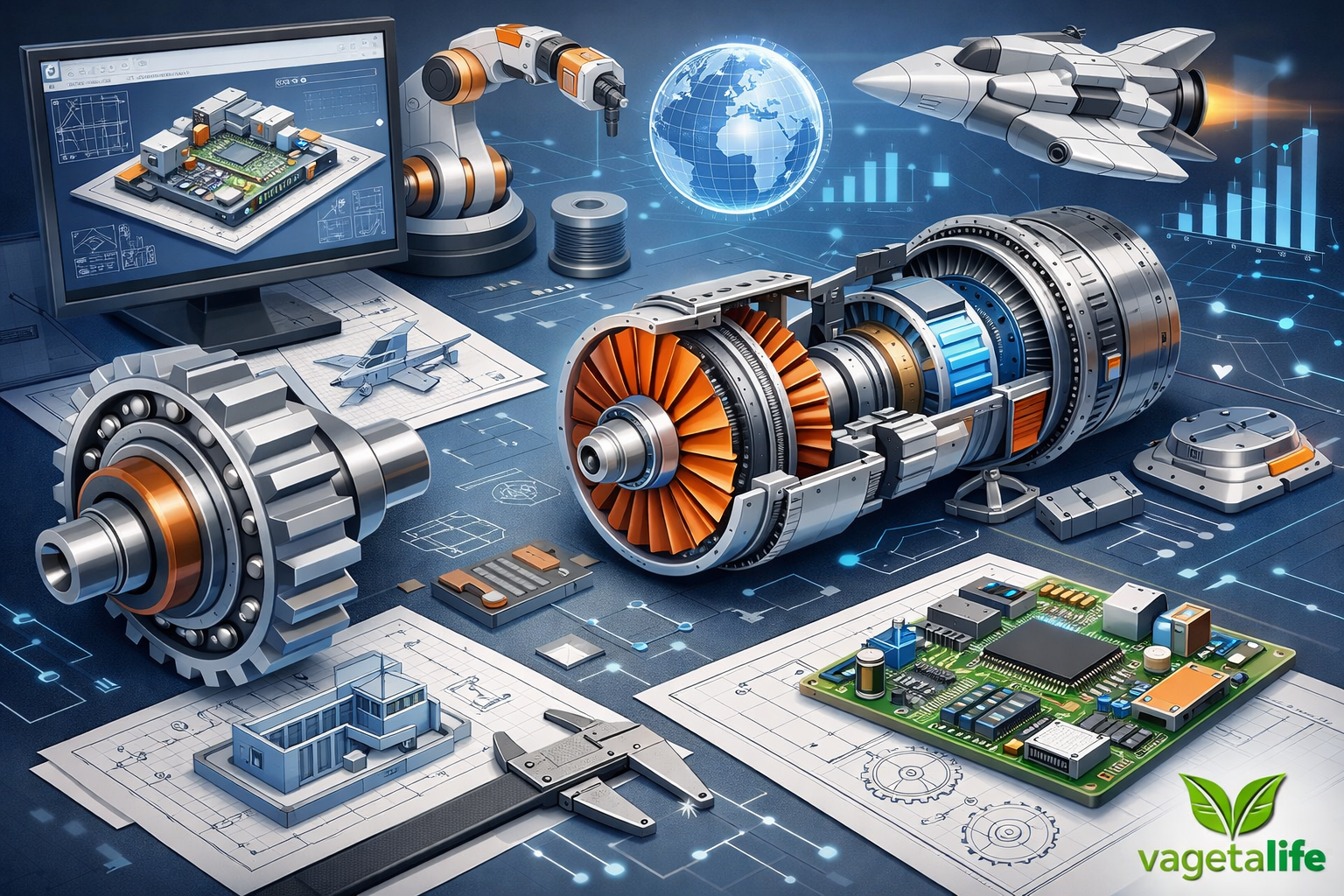
3D technical illustration is a specialized form of visual communication that combines art, science, and engineering to create detailed, three-dimensional representations of objects, machinery, or processes. Unlike traditional 2D technical drawings, 3D technical illustrations provide a realistic, spatial view of components, making it easier to understand complex systems. These illustrations can show the inner workings of a machine, the arrangement of parts, or even abstract concepts, allowing engineers, designers, students, and technicians to visualize the subject with accuracy and clarity.
A key difference between 3D technical illustrations and standard technical drawings is that 3D visuals often include depth, perspective, lighting, and realistic textures, which makes them more engaging and easier to interpret for both professionals and non-technical audiences. For example, a 3D exploded view of an engine not only shows the location of each part but also how they fit and interact with each other, which can significantly reduce misunderstandings during manufacturing or assembly.
Benefits of 3D Technical Illustration
The benefits of 3D technical illustration are vast and impact multiple areas of design, engineering, and communication. One of the most significant advantages is the ability to simplify complex information into a form that is visually clear and easily understood. When working with intricate machinery, electronics, or architectural designs, traditional 2D diagrams can be difficult to interpret, especially for people without technical training. 3D technical illustrations provide depth, perspective, and realistic views, allowing viewers to see how each part interacts within the whole system. This clarity is invaluable in manufacturing and engineering, where understanding the exact placement and function of components can prevent errors during assembly or production. Moreover, these illustrations can enhance training materials and manuals, making it easier for employees or students to grasp complicated procedures and concepts, which ultimately saves time and reduces costly mistakes.
Beyond improving comprehension, 3D technical illustrations also enhance collaboration and communication across teams and industries. Designers, engineers, marketers, and stakeholders can all refer to the same visual representation, which reduces misunderstandings and ensures everyone is on the same page. These illustrations can be adapted for multiple purposes, such as interactive digital manuals, product demonstrations, marketing brochures, and presentations, which makes them highly versatile. Additionally, 3D technical illustrations help businesses showcase their products in a professional and engaging way, increasing credibility and customer trust. Companies that invest in detailed 3D illustrations often see better results in terms of efficiency, education, and marketing impact. Overall, 3D technical illustration not only improves accuracy and understanding but also drives productivity, innovation, and effective communication across diverse fields.
Core Elements of a Great 3D Technical Illustration
A great 3D technical illustration combines accuracy, clarity, and visual appeal to effectively communicate complex information. At the heart of every high-quality illustration is a detailed 3D model that accurately represents the subject, whether it is a mechanical component, a piece of industrial equipment, or a scientific device. The model must reflect real-world dimensions and proportions, ensuring that each part fits together as it would in reality. Along with the model, the use of lighting, shading, and textures is crucial to create depth and realism, helping viewers understand spatial relationships between components. Exploded views, cutaway sections, and isometric perspectives are commonly used techniques that allow the audience to see internal structures and connections that would otherwise be hidden, making the illustration more informative and easier to interpret. Annotations, labels, and callouts are also essential elements, as they guide the viewer’s eye and provide additional context or instructions without overwhelming the visual.
In addition to technical precision, effective 3D technical illustrations must balance detail with readability, ensuring that visuals remain clear and engaging. Overloading an illustration with too much information can confuse rather than inform, so a thoughtful design approach is critical. Color coding, simplified geometry, and selective emphasis on key parts can help highlight the most important features while keeping secondary details unobtrusive. Integration with CAD data, engineering specifications, or product documentation ensures that the illustration is both accurate and practical for professional use. Furthermore, great 3D illustrations are adaptable, capable of being used in multiple formats such as manuals, presentations, online media, and interactive digital platforms, allowing the content to reach a wider audience. Ultimately, the core elements of a successful 3D technical illustration lie in its ability to convey complex technical information clearly, accurately, and visually in a way that is immediately understandable and useful.
How 3D Technical Illustration Works (Workflow)
The workflow of creating a 3D technical illustration begins with gathering all necessary reference materials and data to ensure accuracy and completeness. Designers often start with CAD models, blueprints, photographs, or sketches of the object or system they intend to illustrate. This information forms the foundation for building a precise 3D model, which is the backbone of the illustration. Once the model is created, artists apply textures, lighting, and materials to enhance realism and clarity. Proper lighting and perspective are essential because they help viewers understand the spatial relationships between parts and components, making the illustration visually engaging and informative. At this stage, designers also decide on the best viewpoints, such as exploded views, cutaways, or isometric angles, to clearly convey the function and assembly of the system. Every detail is carefully checked against real-world specifications to ensure that the illustration is not only visually appealing but technically accurate, bridging the gap between conceptual design and practical application.
After the 3D model is fully prepared, the illustration moves into the final stages of refinement and integration. Labels, callouts, and annotations are added to provide context, identify parts, and explain processes, which is particularly useful for manuals, training materials, or technical documentation. The illustration may then be exported in multiple formats, depending on its intended use, including high-resolution images for print, interactive digital files for web applications, or animations for dynamic presentations. This flexibility allows the same illustration to serve different audiences, from engineers and technicians who require precise guidance to clients and marketers who need visually compelling representations. Throughout this workflow, collaboration and feedback play a critical role, as multiple stakeholders often contribute insights to improve accuracy and clarity. By following a structured workflow, 3D technical illustration transforms complex technical data into clear, accessible, and versatile visual content that enhances understanding and communication across industries.
Tools & Software for 3D Technical Illustration
Creating a high-quality 3D technical illustration requires specialized tools and software that allow designers to build accurate models, apply realistic textures, and produce detailed visualizations. Industry-standard 3D modeling software such as SolidWorks, AutoCAD, Rhino, and Blender provide the necessary capabilities to create precise geometric representations of complex components and systems. These tools enable designers to manipulate objects in three dimensions, adjust measurements, and experiment with different layouts or perspectives to best convey technical information. Rendering engines like KeyShot, V-Ray, and Unreal Engine are often used alongside modeling software to add lighting, shading, and realistic materials, enhancing the depth and visual appeal of the illustration. By combining modeling and rendering tools, designers can produce visuals that are not only technically accurate but also visually compelling, helping viewers understand even the most intricate systems.
In addition to core modeling and rendering software, several plugins and workflow aids further streamline the creation of 3D technical illustrations. Libraries of pre-built components, CAD import tools, and annotation plugins can save time and improve consistency across projects. For example, importing existing CAD files directly into modeling software ensures accuracy and eliminates the need to recreate parts from scratch, while annotation plugins allow for the seamless addition of labels, measurements, and callouts that guide the viewer through the illustration. Many modern tools also support interactive formats, enabling viewers to rotate, zoom, or explore exploded views of complex systems digitally. This combination of modeling, rendering, and interactive tools allows 3D technical illustrations to be highly adaptable, serving multiple purposes such as training manuals, marketing visuals, product presentations, and online guides, ultimately making the process more efficient and the final illustrations more effective.
3D Technical Illustration in Different Industries
3D technical illustration has become an essential tool across a wide range of industries, providing clarity and precision where complex systems and detailed components are involved. In engineering and manufacturing, these illustrations are indispensable for showing how machines, engines, and mechanical assemblies function, often through exploded views or cutaways that reveal the interaction of internal parts. They are used in assembly guides, maintenance manuals, and troubleshooting documents, helping technicians and engineers understand complicated machinery without relying solely on written instructions. In architecture and construction, 3D technical illustrations allow designers and clients to visualize building components, structural systems, and spatial layouts, offering a realistic preview of how the final project will appear and function. This capability not only improves communication between architects, contractors, and clients but also reduces errors, rework, and misunderstandings during the construction process.
Beyond engineering and construction, 3D technical illustrations play a critical role in the medical, scientific, and marketing sectors. Medical illustrators use 3D visuals to explain anatomy, surgical procedures, and medical devices, providing clear, accurate representations that support education and patient communication. In scientific research, these illustrations help convey complex processes, mechanisms, and experimental setups that might be difficult to understand through text or traditional diagrams alone. Marketing and product presentation also benefit from 3D technical illustrations, as they allow companies to showcase products with detailed visuals that highlight features, functionality, and design quality. Whether used for training, education, design validation, or promotional purposes, 3D technical illustrations provide a versatile and powerful way to communicate complex information, enhance understanding, and engage audiences across industries, making them an indispensable part of modern visual communication.
Best Practices for SEO-Ready 3D Technical Illustration Content
Creating 3D technical illustrations is not only about visual accuracy and clarity but also about making the content discoverable and effective online through SEO optimization. One of the most important practices is to ensure that every image and illustration includes descriptive alt text, file names, and metadata that accurately reflect the content and context. For example, instead of generic names like “image1.png,” using a descriptive file name such as “3d-technical-illustration-exploded-engine.png” helps search engines understand the subject matter and improves the chances of ranking for relevant keywords. Incorporating the main keyword 3D technical illustration naturally throughout the content, including headings, captions, and introductory or concluding sentences, further strengthens SEO without appearing spammy. Semantic keywords such as “exploded views,” “cutaway diagrams,” or “3D product visualization” should be woven into the content to help search engines understand the topic in a more comprehensive manner, making the illustrations more likely to appear in rich search results and featured snippets.
Another key best practice is to focus on internal and external linking strategies that build authority and improve user experience. Linking internally to related blog posts, product pages, or manuals creates a network of content that keeps readers engaged and signals relevance to search engines. Additionally, linking to authoritative external sources, such as academic publications, reputable technical sites, or industry standards, enhances credibility and trustworthiness, which is particularly important for technical content. Ensuring that images are optimized for page load speed without sacrificing quality is also critical, as slow-loading pages can negatively affect search rankings and user engagement. By following these best practices, 3D technical illustrations can be presented in a way that not only educates and informs readers but also maximizes online visibility, ensuring that the content reaches the right audience effectively and efficiently.
Common Challenges and How to Overcome Them
Creating 3D technical illustrations comes with a variety of challenges that require careful planning, skill, and attention to detail to overcome. One of the most common issues is balancing accuracy with readability. While it is crucial that every component, measurement, and spatial relationship is correct, overloading an illustration with too much detail can make it confusing for viewers, especially those who are not technically trained. Designers must find the right level of detail to convey essential information while keeping the illustration visually clear and accessible. Another frequent challenge is working with incomplete or inconsistent data, such as outdated CAD models, missing specifications, or vague sketches. In such cases, illustrators often need to collaborate closely with engineers, architects, or product designers to fill in gaps and ensure the final illustration accurately represents the subject. This process requires both technical understanding and creative problem-solving to produce an illustration that is precise yet easy to interpret.
Another challenge lies in version control and keeping illustrations up to date with product revisions or design changes. In industries where designs evolve rapidly, a technical illustration can quickly become outdated, leading to potential miscommunication or errors if used in training, manuals, or presentations. To overcome this, illustrators must establish a workflow that allows for easy updates and revisions, often using modular models and maintaining organized project files that can be adapted as needed. Collaboration tools, cloud storage, and digital asset management systems also help teams track changes and ensure consistency across multiple illustrations and formats. Additionally, striking a balance between technical precision and visual appeal can be difficult, as overly realistic renderings may distract from the instructional purpose while overly simplified images may fail to convey necessary details. By anticipating these challenges and implementing structured workflows, 3D technical illustration can consistently deliver clear, accurate, and engaging visuals that meet both educational and professional needs.
FAQs About 3D Technical Illustration
Many people have questions about 3D technical illustration, and understanding the answers helps both beginners and professionals appreciate its value and applications. One common question is which software is best for creating these illustrations, and the answer often depends on the user’s goals and industry. Beginners may start with user-friendly programs like Blender, which is free and versatile, while professionals working in engineering or manufacturing often prefer SolidWorks or AutoCAD for their precision and compatibility with CAD files. Another frequent question concerns the time required to produce a high-quality 3D technical illustration, which can vary widely depending on complexity, available data, and the level of detail required. A simple component might be illustrated in a few hours, whereas an intricate assembly or device could take several days or even weeks, particularly if multiple revisions are necessary to ensure accuracy and clarity. Many users also ask whether 3D technical illustrations can replace traditional 2D diagrams, and while they offer superior visualization and interactivity, 2D drawings are still widely used for certain technical documentation and regulatory purposes, meaning both formats often complement each other.
Other common queries involve practical applications and benefits. People want to know how 3D illustrations improve manuals, training materials, and product presentations. By providing realistic, interactive, and easy-to-understand visuals, they reduce errors, enhance comprehension, and accelerate learning. Some also ask about the ability to update illustrations when designs change, which is achievable through modular modeling and proper workflow management, ensuring that visuals remain accurate over time. Additionally, questions arise about integrating 3D technical illustrations into digital platforms, online training, and marketing media, which has become increasingly important as industries embrace virtual and interactive solutions. Understanding these frequently asked questions highlights how 3D technical illustration is not just a visual tool but a critical component of effective communication, education, and business operations across multiple fields, offering solutions that are both practical and impactful for a wide range of users.
Conclusion: Why 3D Technical Illustration Is Essential Today
3D technical illustration has become an indispensable tool in today’s world of complex engineering, manufacturing, architecture, medical, and scientific fields. Its ability to transform intricate technical data into clear, visually engaging, and easily understandable images makes it an essential medium for communication, education, and collaboration. By providing realistic depictions of products, machinery, or systems, 3D technical illustrations allow professionals to analyze, explain, and refine designs more efficiently while reducing the risk of errors. They also serve as powerful tools for training, enabling learners to grasp complicated concepts faster and with greater retention, while providing businesses with a cost-effective method to communicate procedures, assembly instructions, and maintenance workflows. The visual clarity provided by these illustrations bridges the gap between technical expertise and general understanding, making complex information accessible to a wider audience and supporting more effective decision-making across industries.
Beyond practical applications, 3D technical illustration also plays a critical role in marketing, product development, and innovation. Companies use these visuals to showcase products with precision and detail, helping potential clients or customers understand functionality, design quality, and value before production or purchase. In scientific and medical contexts, they enhance learning and patient education by offering highly accurate and interactive representations of anatomy, procedures, or experimental setups. As technology advances, the use of virtual reality, interactive 3D models, and animation further expands the possibilities of 3D technical illustration, making it even more versatile and influential. Ultimately, investing in high-quality 3D technical illustration is not just about creating attractive visuals; it is about improving communication, supporting innovation, and driving efficiency, making it a cornerstone of modern technical communication and an essential asset for any industry that deals with complex products or processes.